I Use M-Dashes. I Don’t Use Generative AI
I use M-dashes in my writing.
What’s an M-dash? It’s this—this long dash used in the middle of a sentence. It can be used to interrupt—or in place of a colon, or comma. It is a handy tool in novel-writing—especially when writing thrillers. And YA. Both of which I write.
You know who else uses M-dashes? Generative AI.
That is because it was trained on the (stolen) work of those of us who used M-dashes before AI existed.
I just watched a video of an author needing to defend a novel she wrote (in 2021!) when someone accused her of using AI because she used M-dashes. And that’s not the first time this has happened. For some reason, the use of M-dashes has become some kind of “gotcha” for readers trying to detect which writers use AI.
To be clear: I do very much appreciate the backlash against generative AI. It should not be allowed in novel-writing, full-stop. Art is something that needs to be left up to humans to create, not robots. The whole point of writing a book is the labor it takes to create it. Take away that labor, and the entire thing is meaningless. “Writing” a novel using AI is like telling people you ran a marathon when really you took a cab to the finish line.
There’s also the fact that generative AI was trained on pirated novels, without the authors’ consent and without paying them anything. AND there’s the negative impact on the environment. So: many reasons to not use generative AI!
So yes, I appreciate that people want to avoid novels that are written with generative AI. But the problem now is that we don’t have a reliable way of detecting which ones use it and which ones don’t.
I would like to think that every ethical writer abhors the use of it in their craft as much as I do. But I know that there are “writers” out there who are just looking to churn out as many books as possible in order to make some fast money. (Why, if your ultimate goal is lots of money, you’ve chosen to become a writer, a career notorious for not paying most people very much money, is beyond me.)
I would also like to think that AI usage is limited to only self-publishing, where there’s no publishing house regulating what their authors do. But I can’t say with any confidence that this is the case, either.
So: how do we know what’s written with AI, and what isn’t?
There is “AI detection software” which has already shown itself to be irrelevant, given when you feed it classics like Frankenstein, it flags them as AI-written. There are some other tells, like those articles that are written in a very specific format. (You know the ones. They start with a question, then answer it with a bunch of sentence fragments. Ugh.) And of course, there are the people who leave the AI prompts in their novels.
There is also that encouraging news that Claude will include invisible watermarks in anyone who uses it. (It’s HILARIOUS to see AI “writers” getting their knickers in a twist over that—if you think it’s ok to “write” with AI, why do you have a problem with your “work” having an AI watermark on it, hmmmm, Chad?) Hopefully this remains in place with all generative AI, but who’s to say.
But other than that, I’m not sure how this brave new world of generative AI “books” will work. I would like to think I can differentiate human prose from robot prose. So far, when I’ve taken those quizzes where they give you human prose and robot prose, I’ve aced them every time. But the robots are only getting better, or so they say. What happens when it becomes increasingly difficult to distinguish writers who use their brains, and writers who don’t?
I don’t know.
How do we prove we don’t use generative AI? has been a topic in all my writing groups lately.
Save your drafts! some say. Which isn’t a problem for me: you can look at any Scrivener document I’ve been working on for over a year and find no less than 10 previous drafts saved. But how can I prove I didn’t just stick some AI drafts into Scrivener?
I don’t know.
Stop using M-dashes! other people say. To which I respond, you can pry my M-dashes from my cold dead hands. They were mine first.
So really, what am I to do? Set up a camera over my shoulder that records the painstaking hours I spend drafting and send it to anyone who accuses me of AI due to my copious M-dashes? Will it really come to that?
I don’t know.
I’m not even sure what my point is here, except to say: I do not use generative AI. I do not use it to draft novels. I do not use it to edit novels. I do not use it to write articles like this one, or Instagram captions, or emails. I do not use it for art either, not to make covers, or to make aesthetics (and please, if you see an AI image in any social media I post I make, let me know. I get my images from Unsplash and Canva, but Canva’s made it harder to filter out the AI.) I will not use it in a plane, I will not use it in a train, etc. etc. etc.
And I will not read books written with generative AI, so long as I can help it.
But we need to be so careful when we accuse people of using generative AI. These accusations have already cancelled two publishing contracts, that I know of. I haven’t read the books in question, so I don’t know if they’re accurate accusations. But I do know that the use of an M-dash or twenty is not an indication of AI use.
What would be great is if we could just put it back in the bottle. Go back to a time before generative AI existed. But I’m not foolish enough to think that’s even remotely a possibility.
All I can do is keep writing my novels (and articles, and instagram captions) like this: slowly, painstakingly, with only my brain. And hope that enough people in the publishing industry have enough integrity to continue to refuse the siren song of robot-writing regardless of its ease, speed, and potential profitability.
And if I am the last person not using AI in my writing and get “left behind”? Then I am perfectly happy to stay back here at the end of the race with my Luddite ways.
But I have a feeling I won’t be alone in this.
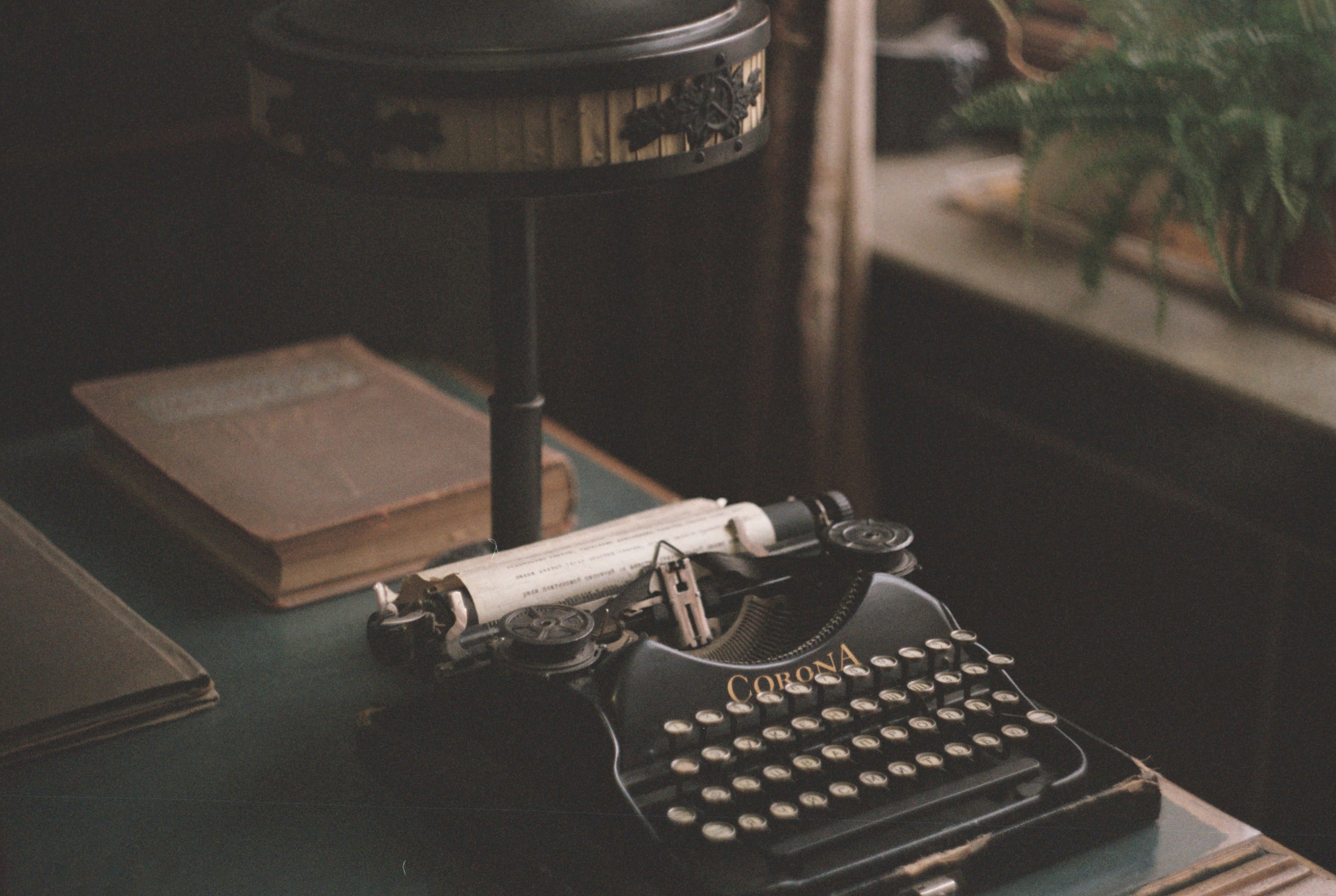
Photo by Daria Kraplak on Unsplash